The Circular.ie Communications Lab is a new platform for sharing, analysing, and demystifying research which is useful for circular economy communications. The new website launched alongside new research which explores how life transitions like moving house, getting a new job, or becoming a first time parent can affect how people understand circular communications and behaviours.
The key findings from this report were presented by Research Officer Samuel Perpétuo at our launch event, which you can read about here. In this post, however, we are going to deep dive into 9 of the key insights that came out of a very enlightening panel discussion that took place at the event.
Likeness and difference
The 2026 Synthesis Report focuses on 5 key moments which represent opportunities to change behaviours and take circular actions: moving out, becoming a parent, work change, buying or moving home and retirement.
The 2025 report told us who the audience is, this new research tells us when we need to reach them, giving a better understanding of how people are thinking at key moments in their lives.
What we have learned is there are important differences between people over and above factors like age, gender, and socioeconomic factors. In other words, two people can be very different to each other despite coming from exactly the same background.
Luck plays a key role
The intention to be circular may be there, and the existing academic literature may indicate taking one approach or another. However, Rebecca Wilson, Rediscovery Centre’s Director of Research and Policy, made the point that there is a lot of messiness and ambiguity surrounding that, and the new research goes a long way towards cutting through that messiness and understanding people’s motivations.
Gordon Hunt, communications manager at Circular.ie, added that because of this messiness, there is an element of luck to which communications will land and which will fade away into the void. The same communication can land well or poorly with exactly the same cohort of people at different times. The zeitgeist is tricky to pin down.
There are opportunities but no guarantees
Another key insight from the research identified by the panel was that the opportunities presented in the research are there and they are real, but they are not guaranteed. Whether those opportunities are missed or taken depends on whether people actually have the infrastructure and information they need to take circular action. In other words, it is about the circumstances of the choice as well as the intention and the communications.
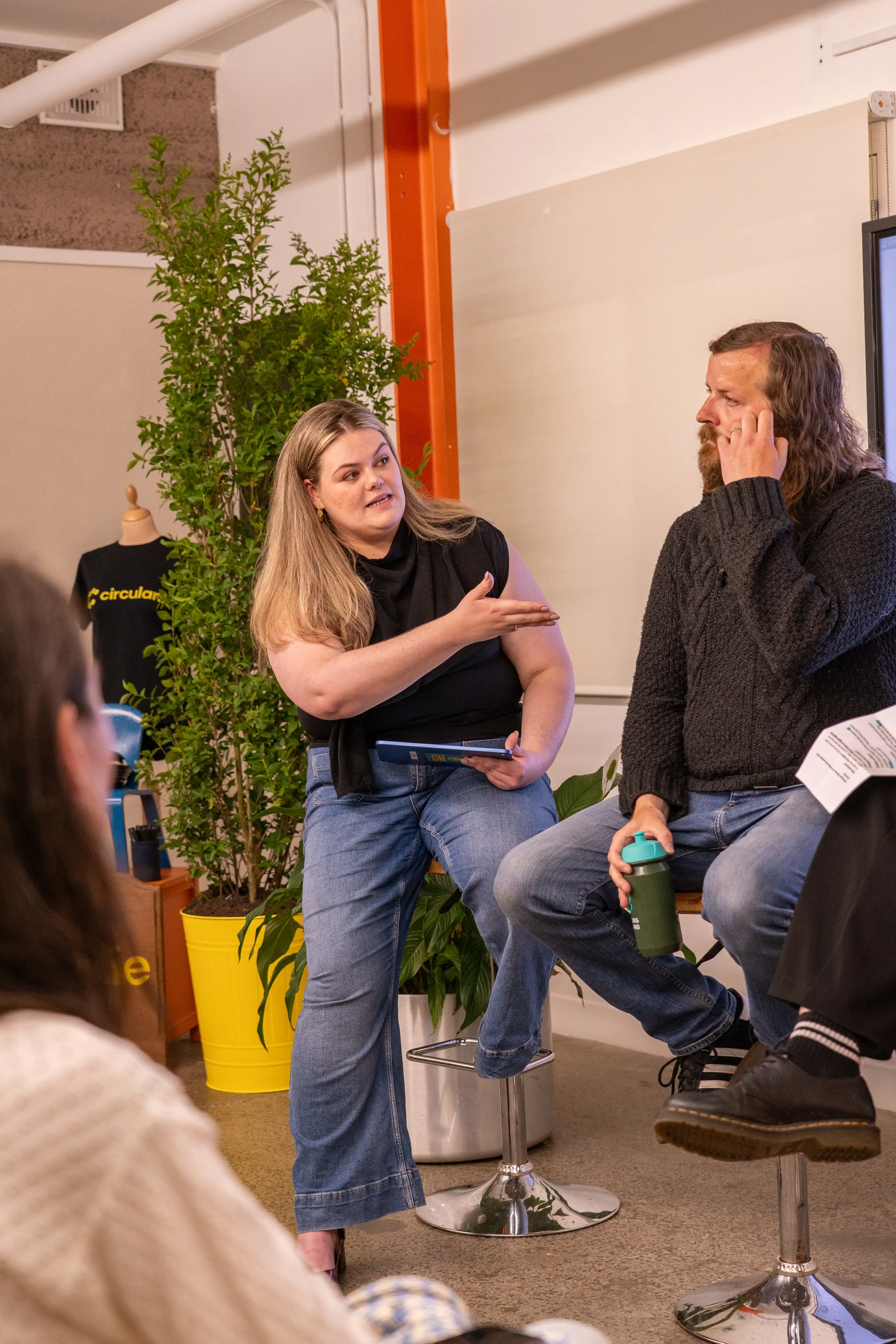 The panel discussion featured Rediscovery Centre’s Director of Research and Policy Rebecca Wilson and circular.ie communications manager Gordon Hunt, and was facilitated by circular.ie community engagement lead Eibhlin Fitzpatrick.
What makes this new research unique?
A unique selling point of the new research, as the panel saw it, was that most communications research focuses on focuses on effectiveness of digital tools . In other words, insights about communications strategies depend largely on analytics from webpages and social media, which show engagement through figures like number of impressions or click-through rates.
The synthesis report released alongside the communications lab took a different approach, focusing on actual everyday life instead of numbers on a screen. It understood that systems, interactions, and people’s needs ultimately determine how people will act.
We are already circular-ish!
The point was made that communications should support the circular behaviours we already have. This idea came up again and again - people are already doing circular things even if they are not calling them circular. How can we communicate to people the value of what they are already doing and allow them to build on those behaviours?
More broadly, the panelists made the point that positive reinforcement is what is needed to bring people along on the circularity journey. Communicators should not aim to shame people for what they are not doing, but rather celebrate people who are taking part in circular behaviours, and encourage them to share their work with others. As Gordon put it, it makes most sense from a marketing perspective to ‘sell chocolate bars to people who buy chocolate bars’.
Plug-and-play solutions
Whether the life event is positive or negative, moments of change like these tend to be stressful for people. People in stressful situations are looking for easy wins! They don’t want extra work, so if we can frame circularity as an easy win, they will be more likely to accept it. It is not about doing more, it is about doing things differently.
This idea was linked to the massive uptake in the use of Vinted across Ireland. People are not really changing their habits. They are still buying clothes online and having them delivered, they are just doing it in a more circular way. This was described by Gordon as a ‘plug and play’ solution.
 Is sustainable sexy?
Another question that came up was whether or not we should be using phrases like ‘circular economy’ or ‘circularity’ at all! While these terms are accepted by professionals in the industry, it is still an open question whether they are effective when we are communicating to the general public.
More broadly, the question was raised whether we should be using the language of ‘sustainability’ at all. One panelist made the point that even if people were taking part in borrowing behaviours, they were not necessarily thinking about those behaviours as something sustainable (even though they absolutely are sustainable). Instead people were conceiving of reuse and borrowing behaviours in a more Irish way.
No, savvy is sexy!
Irish people love nothing more than to be savvy. Indeed, we love to be more savvy than the next guy. The panelists spoke about how they were surprised quite how often that word came up during the focus groups carried out for the new research.
The language we use to communicate circularity needs to resonate with the people who we want to become more circular. We need to communicate to people that it is savvy to reuse, repair, and borrow. We can also communicate that it is sustainable, and perhaps we need to communicate that it is ok for it to be both things at the same time.
Close to the skin, far from circularity
The panelists discussed an interesting finding from the new research - people are more likely to accept the circular option for items which are used physically further away from the body, or seen as less personal. In other words, bedsheets are out but tables are in. Knowledge of the source of the item also makes a big difference. It’s ok if my nephew vomited in a buggy, but if it was a stranger then that’s yucky.
These findings have important implications for circular communications! For example, maybe we should lead by asking people to buy second hand books instead of second hand bath towels. As Gordon so eloquently put it, “if this is the river, that’s where you put the bridge”.
Trusted voices speak the loudest
The panel discussed the idea of anchor points within communities. Who do we want to hear advice from? One of the issues here when it comes to communications is that in the digital space, those trusted voices like community groups are having to compete with giant multinational companies who “live in your pocket 24/7”. The example given was that if people are worried about the hygiene or quality of second hand products for their babies, then maternity hospitals and parenting groups need to be the ones sharing the right messages in order for people to actually listen.
Moving Forward
Keep an eye on the Circular Communications Lab over the next few months, as we will keep adding more research and analysis for you to sink your teeth into. Keep an eye out also for the national campaign from circular.ie over the next few months.
Thank you to Ipsos B&A, the Department of Climate, Energy and Environment (DCEE), the Environmental Protection Agency (EPA), the Economic and Social Research Institute (ESRI), the Regional Waste Management Planning Offices (RWMPO)